
No Fixed Abode

“As long as you get someone’s name and address in your pocket book, everything else can be worked out later.”
Words of wisdom I remember from one of my first days at Hendon, the Metropolitan Police training school. The question can blunt the shock for a victim, make a suspect begin to understand the implications of what he has done, and give the courts some hope of finding a witness two years later.
It becomes such a matter of routine that it stops being a question and turns into a rhythm. People often answer in the same rhythm before you’ve finished asking, because some people have been giving their details to the police all their lives.
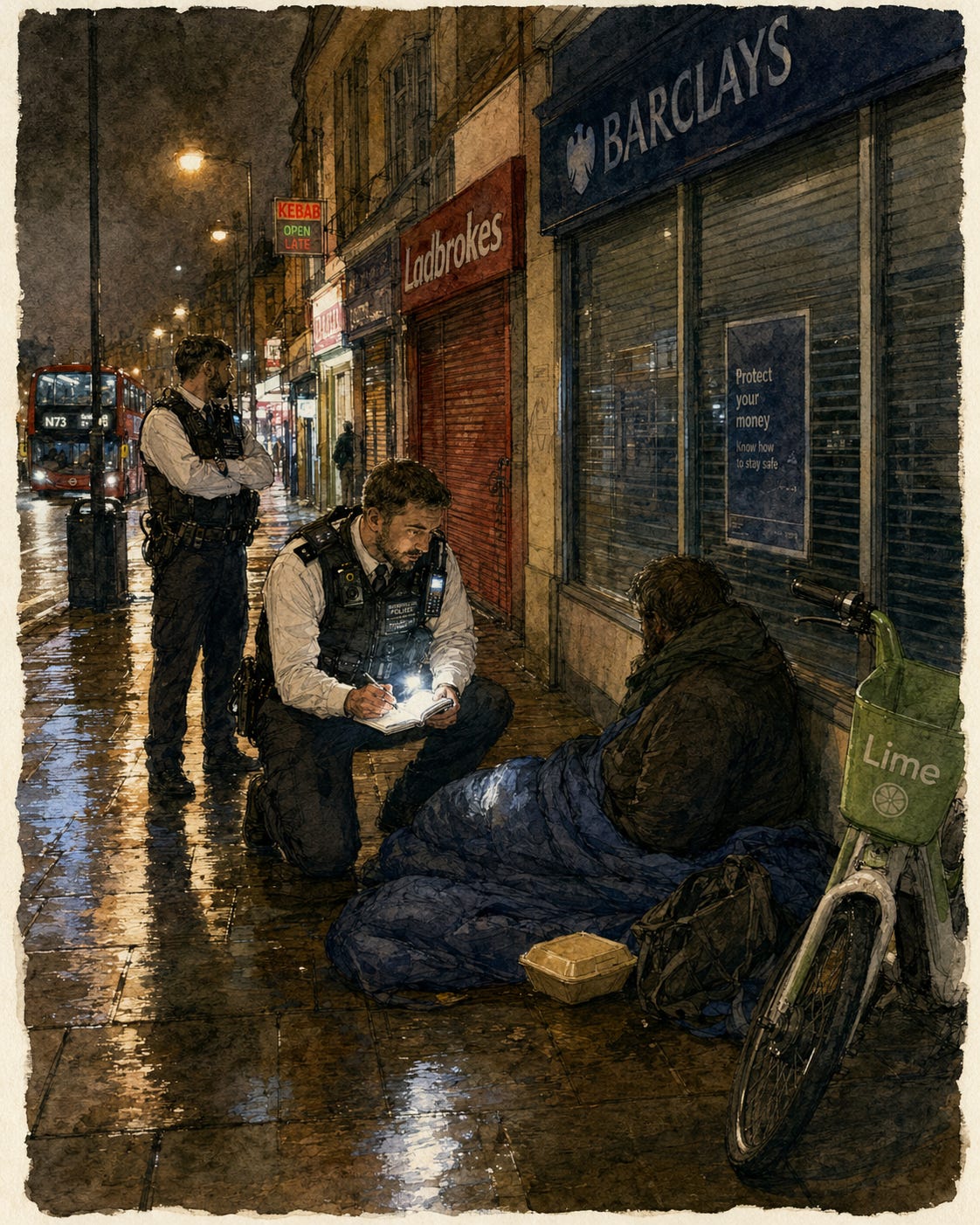
So I’m crouched next to Michael on the corner of a high street. Sleeping bag, back against the window of a closed bank, gone midnight. Name. Date of birth. Address, because it’s what I ask everyone.
And the homeless man tells me his address. Street, flat number, postcode. He isn’t lying. It’s his flat, the council gave it to him years ago, and I could have walked there from this corner in about ten minutes. So could he.
On Monday Andy Burnham stood outside Number Ten on his first day as Prime Minister and announced that his government will end rough sleeping. I was a police officer in central London when this was last tried, and the trouble is that ending rough sleeping and giving everyone somewhere to sleep are not quite the same thing.
I. The flats
On paper, Michael was housed. He had been housed by the local council for 18 years. His tenancy agreement said so, so did his housing officer and so did the forms we filled out every time we met him.
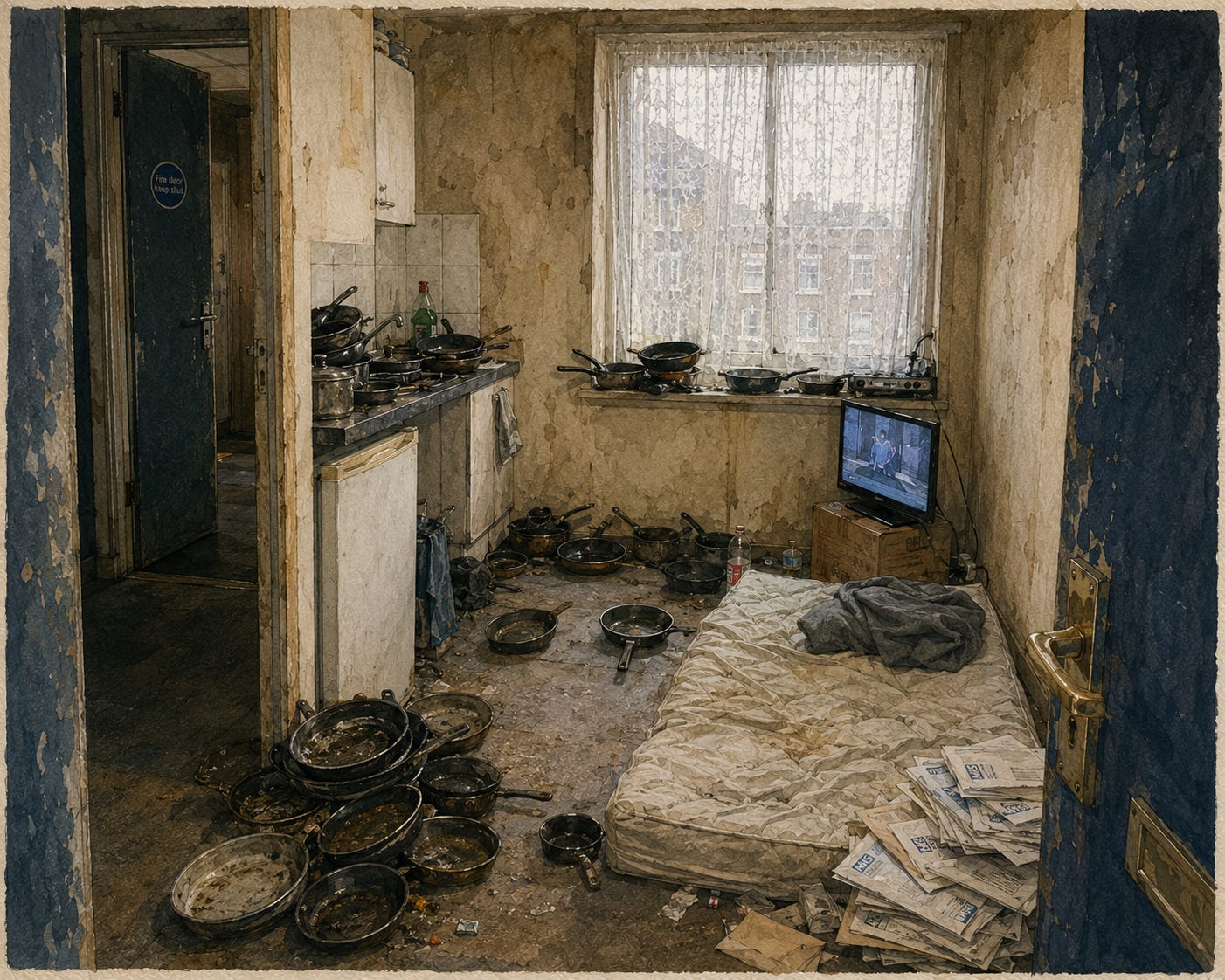
I even went into his flat once. It was on the second floor of a Victorian terraced house in Notting Hill up a hallway that smelt of damp, behind a fire door. I went there when Michael failed to turn up to a doctor’s appointment and a welfare check was requested. His front door was wide open and I noted the following contents of his bedsit of 18 years: an unmade mattress on the floor with a hoodie as a pillow, a flat-screen TV teetering on a cardboard box, a pile of letters from the National Health Service, and 35 frying pans, all dirty. The TV was on, but no one was home.
Michael was by no means unusual. Over five years I dealt with plenty of people the government or newspapers would call homeless but who held longstanding tenancies. Some flats stood empty, and some were full of the wrong people.
The official term is cuckooing, one of those words used by police, councils and safeguarding teams that sounds almost quaint until you have stood inside a cuckooed home. There was a house we were endlessly called to. In theory, its tenant was a middle-aged man with learning difficulties named Simon. Simon was lovely, but he was lovely to everyone. A gang in the borough had taken advantage of his kindness and set up shop in it.
Simon would sit watching daytime television while junkies smoked crack on his sofa, sold to them minutes earlier by a 15-year-old. I asked Simon once if he wanted these people in his house, and he said he did: “They’re my friends.” After a dozen safeguarding referrals, the courts placed a closure order on the house, preventing anyone other than him from being there. The gang just moved on and found someone else, leaving Simon in a wrecked house that smelt of crack.
Both Michael and Simon were housed. It said so on every system I ever looked at.
II. The hotels
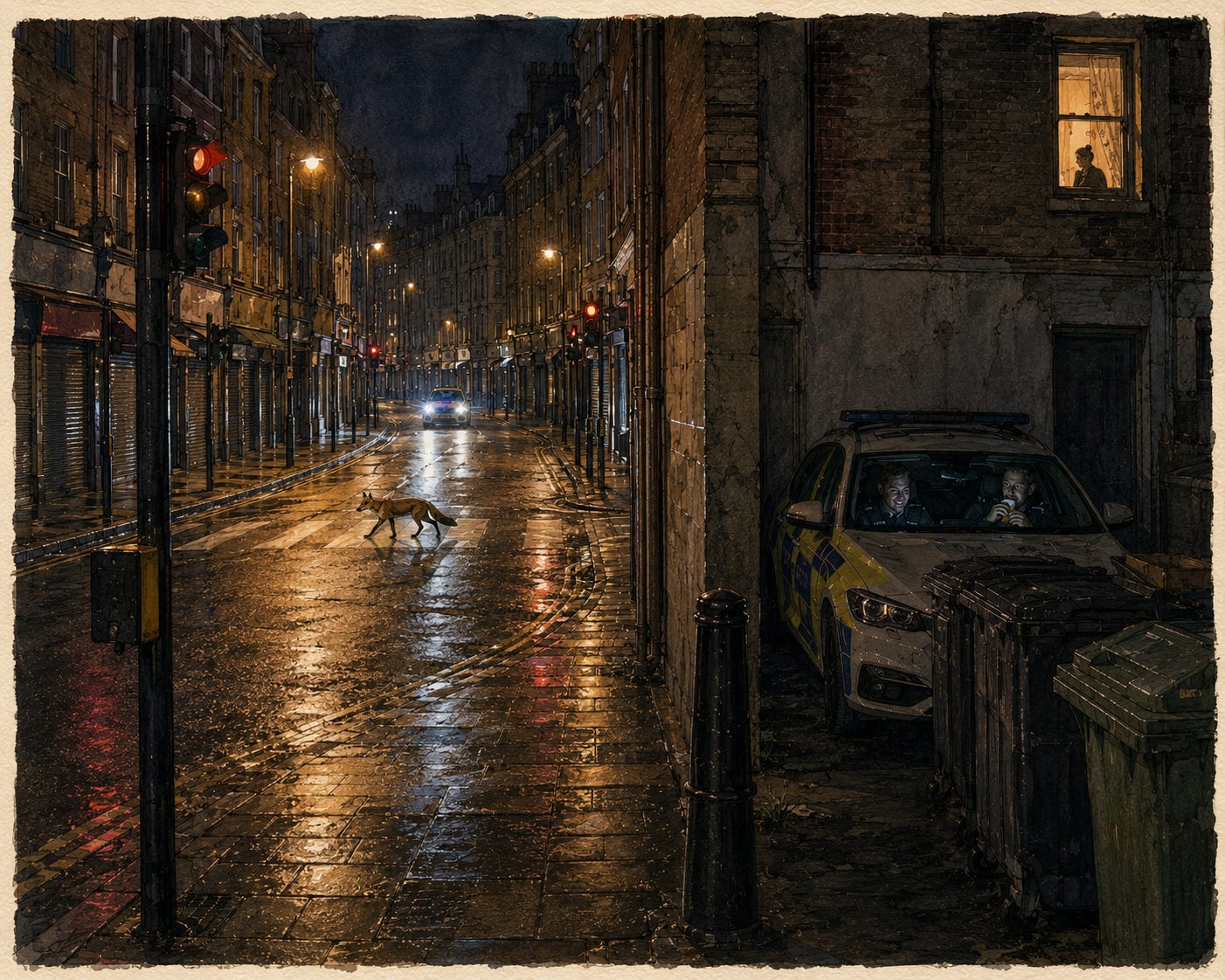
During Covid, London went Q - police refuse to say “quiet” as it summons grief. Volume crime vanished, leaving us a carousel of mental health and domestic violence. Streets that had been filled with tourists and workers were empty, and with no tourists there was no one to beg from. With no calls to go to, we played hide and seek in marked cars, concealing ourselves down alleys and behind council estates while the rest of the team tried to find us. For a job you navigate through by incident, there were no incidents.
But one place the volume never went down was hotels. The scheme was called Everyone In: with tourism dead and thousands of rooms sitting empty, councils block-booked hotels and moved hundreds of people indoors, more or less overnight.
I remember a disturbance at a three-star hotel off the Cromwell Road, the kind of place that used to take coach parties visiting London from regional England. The lobby still had a stack of West End show leaflets by the door, under the shadow of a rapidly installed hand sanitiser station. A support worker in a lanyard and hi-vis vest met us at the lifts and said two men were arguing on the fourth floor about a £10 Tesco voucher that had allegedly been stolen. The corridor smelt of microwaved food and every door handle had a bag hanging off it, meals delivered like room service and half of them from the day before, untouched.
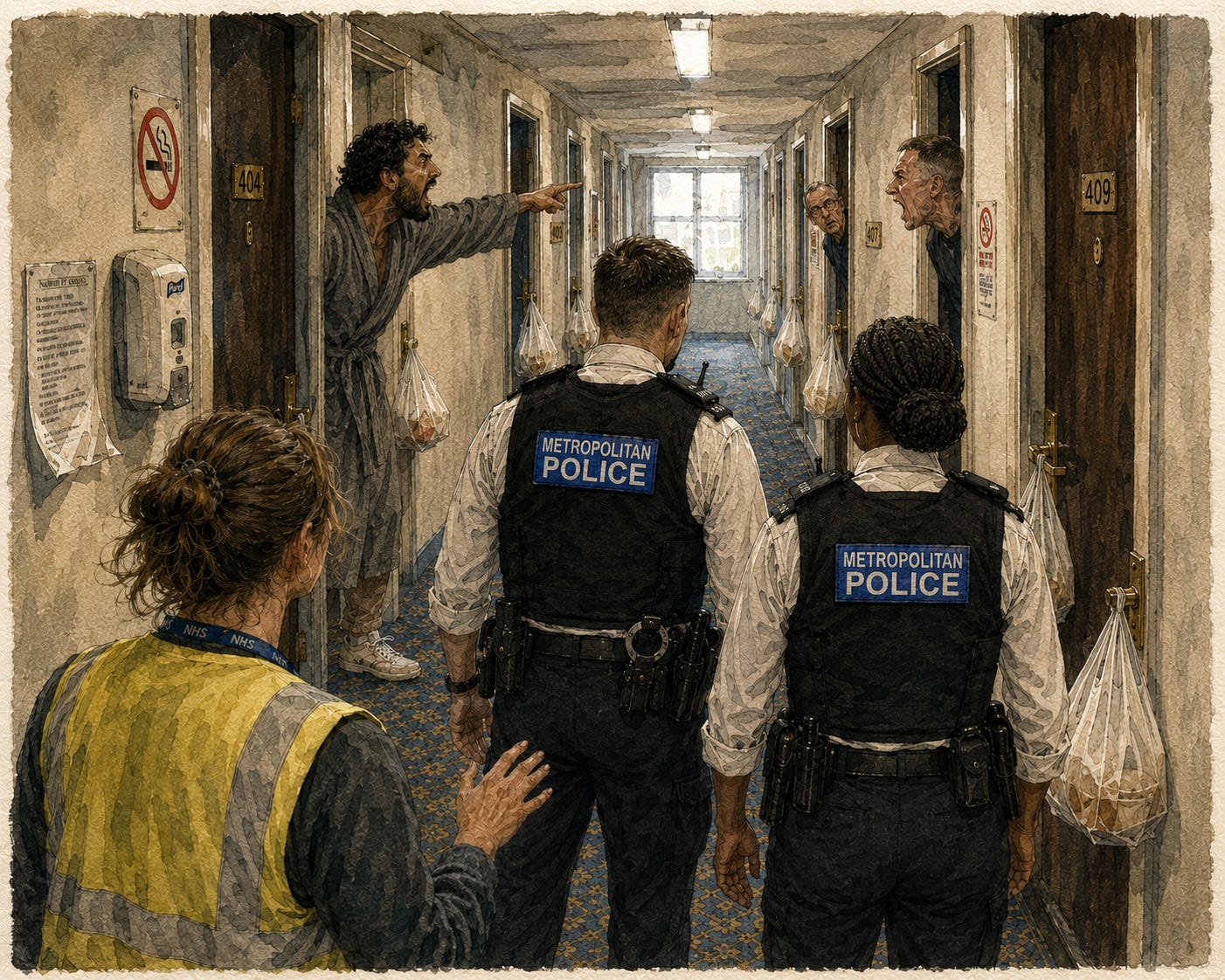
The two men were screaming at each other, and while I knew both from previous incidents, I realised it was the first time I had seen either of them inside. Every few sentences, a door would open and a third character I recognised would poke out like a cuckoo clock and himself scream at the pair of them to shut up. If handled badly, this would end up with a report for burglary and a trip to the cells with a man who had once tried to bite me.
We had staff issue a second voucher, and both men retreated into their rooms.
Some of these hotel guests had been sleeping rough for years. Others were like Michael.
There was also a Scottish man who lived in a council flat in a nicer part of the borough. I remember him because he had no teeth and a thick Glaswegian accent that made him almost impossible to understand when he was sober. I had arrested him once for kicking his neighbour’s door in, mistaking it for his own. So I was confused to find him in a hotel off Portobello Road. I knew his address; I’d written it in my pocket book. But the volunteers doing homeless outreach had worked off what they could see. They had walked the borough late one night, found him in a sleeping bag, and informed him the council had booked him a hotel room. A volunteer doesn’t think to ask whether the man sleeping rough on the street has been a long-term council tenant. I asked him where his dog was, a Jack Russell he was rarely without. “At home,” he gummily replied. “They won’t let her in.”
III. The rooms
“Can we have a unit make their way to St Mungo’s.” Then nothing. The radio, which was usually a bunfight of officers cutting each other off whenever a suspects-on burglary came out, went silent. Everyone waited for someone else. Eventually a sergeant would assign the nearest car by callsign, and whoever it was would key up and say “All Received, Skip,” in the voice of a man accepting a sentence.
The homeless hostels like St Mungo’s were run by charities and where the system sent people when it worked. We attended most weeks anyway.
A bedsit is quiet. For some of the people I dealt with, quiet was the enemy. Out on the streets there were people who knew their name, and a routine. Our men on the streets, because they were almost all men, would find a pitch they liked and somewhere to eat, a soup kitchen, a church hall. Usually a dog. Indoors there were four white walls under fluorescent light, and a desk manned by officious people in lanyards who stopped you bringing in whatever you used to keep the trauma at bay. It gets louder in the silence.
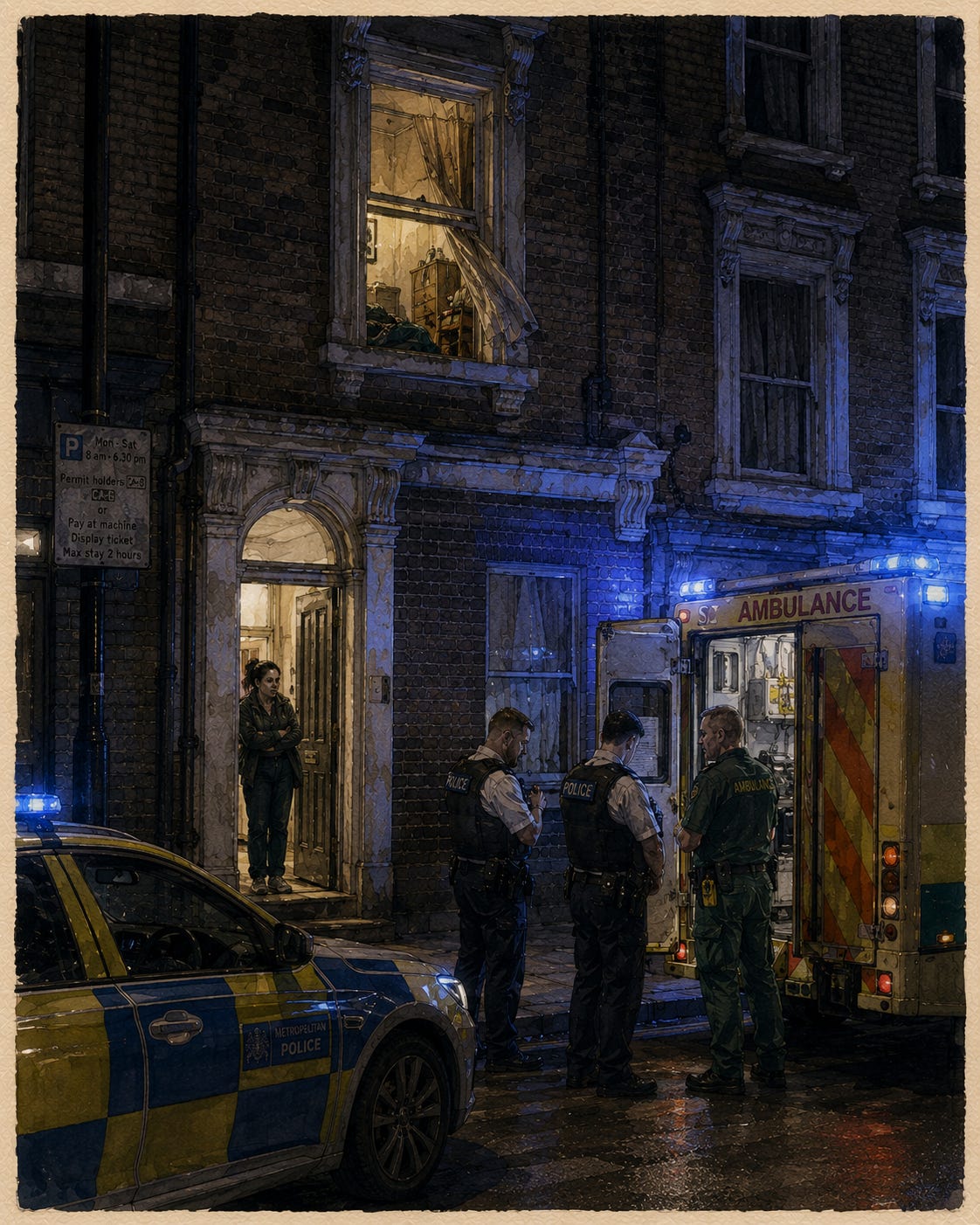
There was a man who had lived his whole life on the streets before the council decided that he would be placed into a room at St Mungo’s off King Street in Hammersmith. He was in a room he didn’t want, with a neighbour he didn’t want. The two fell out and assaulted each other, so the police were called. He pulled a syringe, and my colleague pulled a Taser. He tried to jump out of the second-floor window and we stopped him. He kicked, spat, scratched and assaulted everyone on the way to custody, and the courts decided that he would be returned to the community because of his mental health. I couldn’t tell you what prison would have done for him either.
I’m not going to pretend I fully understand it. I made tea in a lot of kitchens and stood in a lot of doorways and I can tell you what people did, not always why.
IV. It sometimes works
There was a man who used to have a pitch outside a bank on Earl’s Court Road. At some point I stopped seeing him. It took months to notice; absence isn’t a call the police answer. Usually, such a disappearance is bad news and so one slow night, I ran his name in the computer. Nothing for over a year, no arrests, no welfare checks or sudden death reports. For the average person, no contact with police is unremarkable, but for someone like him it was an anomaly.
Then one day we were called to an address in the borough that neither of us had been to before. A clean, semi-detached Edwardian red-brick in a nice part of Fulham, where the council puts the better behaved tenants. It was a report of anti-social behaviour, and we didn’t look at who our informant was before knocking on the door of the downstairs flat. The man I still thought of as the beggar from outside the bank answered, minus the matted hair, and behind him was a hallway of framed pictures.
He wanted to report a man who’d been shooting up by the bins.
Someone on another team said later he’d gone through detox and come out the other side of a charity’s transition programme. Nobody had given him just a flat. The flat came last. In five years I never once saw it work the other way round.
Great piece! I work in a Knightsbridge church and have seen a lot of stuff like this. There is a huge variation between the different types of folk who need some sort of help. A lot of very odd many kind often funny but there are always a few rougher sorts.
I'm glad that ended on a happyish note. All of us need a sense of human connection but many of us don't get it due to being innately obnoxious. Or perceived so. Or both. I rarely hear "homeless derelicts" actually begging these days. The ones I see are NOT soliciting money. They have a room in a drugs project or in a squat or doss,and yes,some of them have a council flat and inside it is like the one described. Because they don't want to sit inside all day watching Bargain Hunt and Flog It on tv every day. Even I don't want to do that and I like those TV shows (but I don't have a TV now). Sat outside Lidl or Morrisons or Tesco they get to see their friends,people talk to them as regulars,they get conversation,money sometimes but it's offered or given not asked for. This is my analysis. They need someone to take care of them,to care about them but that person doesnt exist,or did but they drove them away.Care in the Community was the stupidest idea ever because the Community doesn't care. The community is where they burn witches.